Key Takeaways
Understanding cellulite is more than skin deep—its aesthetics are shaped by biology, culture, and clever marketing. Here’s what tech-driven professionals and creatives need to know to separate perception from reality, and drive truly authentic conversations around beauty.
- Cellulite is universal and normal—it appears in 80–90% of women, regardless of age, body type, or fitness level, thanks to basic skin anatomy, not lifestyle choices.
- Biology, not behavior, creates dimples—collagen structure, genetics, and hormones are the main drivers, meaning even elite athletes spot cellulite.
- Most “quick fixes” lack real evidence—creams, diets, and even liposuction often fail or worsen appearance, while only a few minimally invasive treatments show modest, not guaranteed, results.
- Cellulite’s stigma is a marketing invention—the “problem-solution” narrative emerged in 20th-century ads, fueling a multibillion-dollar industry despite scientific reality.
- Photoshopped images drive unrealistic standards—filtered media leads 60% of women to feel personally at fault for cellulite, and 57% to report feeling judged or criticized.
- Body-positive trends and transparent marketing matter—campaigns using unedited photos and #CelluliteIsNormal hashtags are tilting the conversation toward acceptance and authenticity.
- Psychological impact runs deep—social shame causes half of women to avoid mirrors or swimsuits, but curating social feeds and self-compassion can help reclaim confidence.
- Shift the narrative in your work—champion body diversity, call out unrealistic images, and prioritize science-backed, stigma-free messaging to influence both consumer attitudes and industry standards.
If you want your brand or content to lead (not follow) on body positivity, dig deeper into the article for practical ways to embrace authenticity and drive lasting change.
Introduction
Did you know that up to 90% of women—regardless of age, body type, or fitness level—have cellulite? If you’ve ever scrutinized a selfie, hesitated at the pool, or wondered why some skin is perfectly smooth on your feed but “bumpy” in real life, you’re not alone—and you’re not doing anything wrong.
Despite its prevalence, cellulite remains one of the most misunderstood and marketed features of the human body.
Scroll through your favorite app or catch a summer ad campaign, and you’ll spot these trends:
- Glossy, filtered skin labeled as the “ideal”
- A multibillion-dollar industry promising “quick fixes”
- Consumers left sorting fact from hype, confidence from comparison
But here’s the kicker: the very idea that cellulite needs fixing was seeded by decades of strategic marketing—not by medical fact.
For tech-minded pros, creators, and modern brand leaders, this context changes everything. Understanding the actual biology of cellulite—and how it’s been repackaged as a so-called “problem”—empowers you to:
- Sharpen your messaging with insights rooted in real science, not obsolete myths
- Spot and counter old narratives in content, campaigns, or influencer partnerships
- Champion truth and transparency in a market flooded with misinformation
Unpacking the aesthetics of cellulite means seeing how perception and reality split—and how both shape identity, wellness choices, and consumer trust.
So, what’s cellulite, really? Why has it carried so much cultural baggage, and how can we collectively shift the narrative—from boardrooms to social streams, creative briefs to personal self-talk?
Get ready for a candid look at the intersection of biology, beauty standards, and bold new marketing, starting with the real anatomy beneath the skin.
Understanding the Biological Reality of Cellulite
Cellulite isn’t a flaw or a rare condition—it’s an anatomical feature present in 80–90% of women across all ages, ethnicities, and body types.
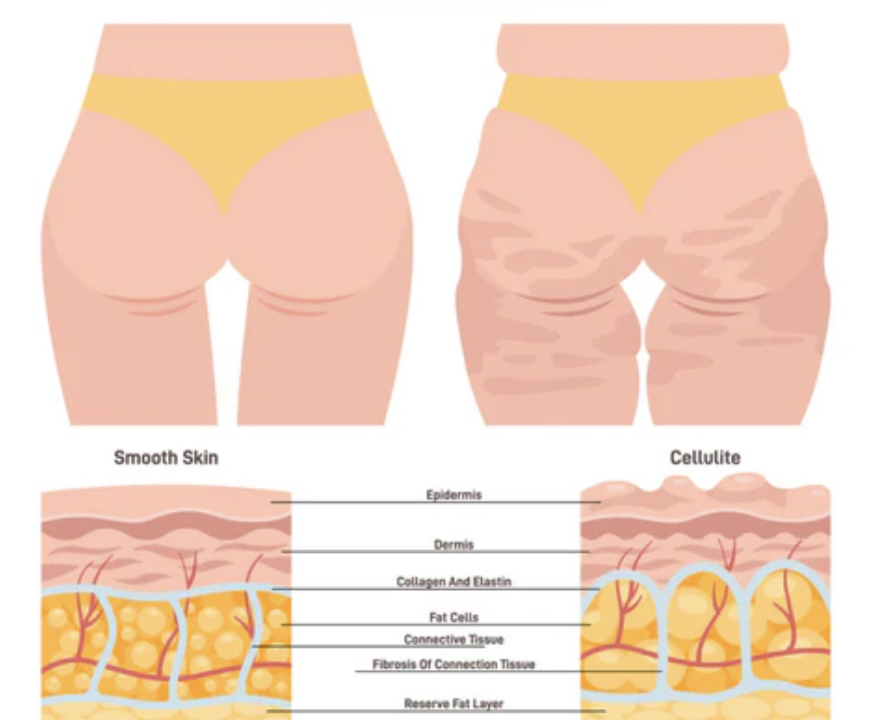
What causes that familiar dimpled look? It’s the interplay between these key layers under your skin:
- Fibrous septa: Connective bands running vertically in women (and in a crisscross pattern in men)
- Subcutaneous fat: Fat compartments pressing upward
- Collagen structure: Differences in fiber orientation that determine visibility
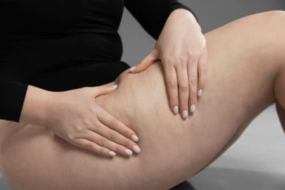
The result? Picture your skin as a quilt: fibrous bands pull down while underlying fat pushes up, causing that “orange peel” texture—no toxins, no laziness, just basic biology.
Why Sex, Genes, and Hormones Matter
Women get cellulite more often due to vertical collagen fibers—men have a net-like pattern that holds skin smoother.
Several factors boost your chances of seeing dimples:
- Genetics: If your mom had cellulite, odds are you will too
- Hormones: Estrogen decline (think puberty, pregnancy, menopause) increases risk
- Body weight: Can accentuate appearance, but even elite athletes and thin individuals develop cellulite
This means you could run marathons or avoid carbs and still spot dimples in the mirror—fit bodies get cellulite, too.
Common Myths vs. Scientific Facts
Let’s bust some tired myths with the evidence:
- Cellulite is not a sign of obesity—thin people have it
- Toxins aren’t to blame—no science supports this
- Exercise/diet won’t eliminate it—they can reduce fat, but not change connective tissue
Many topical creams and salon treatments claim miracles, but rigorous studies show:
- Creams and lotions: Provide, at best, temporary tightness
- Liposuction: May actually worsen lumpiness
- Targeting septa: Only minimally invasive procedures designed to sever septa have demonstrated some improvement, but results aren’t guaranteed
Setting realistic expectations up front is crucial—“quick fixes” almost never deliver the flawless skin seen in filtered ads.
The Real Takeaway
Cellulite is a harmless, totally normal part of human anatomy—not a defect, not a disease.
The next time you see a photoshopped ad promising to “erase” cellulite, remember: natural variation beats unrealistic perfection every time. Understanding the science empowers you—and helps shift the conversation away from shame, toward acceptance and authenticity.
The Cultural Lens: How Society Shapes the Aesthetics of Cellulite
Picture this: you’re flipping through a glossy magazine in the 1960s, and suddenly, the word “cellulite” jumps out at you—framed as a brand-new problem you didn’t know you had.
This isn’t an accident. The negative spin on cellulite was born in 20th-century marketing, with magazines and brands fueling the idea that it’s a flaw crying out for a fix.
From Marketing Gimmick to “Problem” Needing a Solution
The term “cellulite” exploded in Western media when advertisers began selling creams and treatments, driving a message that normal skin texture required fixing.
- Ad campaigns and magazines in the 1960s-70s spotlighted cellulite as a “disease,” not just a feature
- The beauty industry’s messaging built a multibillion-dollar market for “cures”—despite scant scientific backing
Globally, perspectives differ:
- Western culture often links cellulite to shame and personal failure
- In contrast, some regions—spurred by body positivity movements—frame it as normal, even beautiful
Media, Celebrities, and Shame: The Modern Narrative
Open any social app or magazine and the bodies you see are suspiciously smooth.
- Photoshopped and “flawless” images dominate, compressing beauty standards to the near-impossible
- Influencers and celebrities either reinforce this ideal or—refreshingly—post unedited, real-skin photos to challenge it
Stats paint a stark picture:
- 60% of U.S. women feel personally at fault for having cellulite
- 57% report being judged or criticized, and nearly half avoid mirrors or swimsuits out of shame
- Meanwhile, 92% of dermatology experts agree: cellulite is not a flaw, not your fault
For brands, this narrative isn’t just aesthetic—it’s lucrative. The beauty sector profits massively from the stigma, with anti-cellulite products filling shelves and screens, regardless of effectiveness.
“Cellulite isn’t a flaw, it’s a cultural story—one we have the tools to rewrite.”
Beauty Standards: Yesterday, Today, and Tomorrow
Beauty ideals are always shifting.
- In the past, “perfection” meant hiding every dimple
- Now, body-positive trends—like viral unfiltered selfies and authenticity-forward marketing—are tipping the scales
Check out these shifts:
- Brands are moving from a “fix it” narrative to campaigns that celebrate natural variation and body diversity
- Hashtags like #CelluliteIsNormal and unretouched photo shoots are driving real change in ad language and consumer mindset
Consumer attitudes echo this pivot:
- Demand for transparency has grown, with buyers questioning claims and seeking science-backed results
- Surveys show younger generations are more likely to describe cellulite as a normal part of anatomy, challenging decades-old shame
We’re witnessing a major shift: cellulite is slowly moving from taboo to typical, largely thanks to media disruption and authentic storytelling. Whether you’re a brand, creator, or consumer, challenging outdated narratives and embracing body reality isn’t just positive—it’s powerful.
The Psychological Impact of Cellulite Perception
Cellulite is a fact of life for up to 90% of women, yet social attitudes can make it feel like a personal failing instead of a normal trait.
That pressure shows up quickly: nearly 60% of women feel at fault for their cellulite, and 49% admit it bothers them enough to skip mirrors or summer trips. These numbers don’t just exist as statistics—they’re lived experiences shaping self-confidence every day.
Emotional and Social Ripple Effects
When cellulite is labeled a flaw, it ripples through mental health and daily choices:
- Lowered self-esteem—women report feeling less attractive or worthy in both professional and personal circles
- Social withdrawal— avoiding beach days, pool parties, or public dressing rooms becomes routine
- Chronic self-blame—many internalize stigma, believing they're responsible for something outside their control
Picture this: breezy summer weather arrives, but you’re scanning your closet for clothes that hide, not highlight, your body. That scenario plays out for millions each year.
How Stigma Shows Up Everywhere
Stigma doesn’t impact everyone equally.
- All ages—teens, new moms, and postmenopausal women report shame and anxiety
- All genders—while much higher in women, men are not immune to embarrassment, thanks to shifting appearance norms
- All cultures—Western media tends to amplify negativity, but even societies with body-positive movements aren’t entirely immune
Recent data spotlight this intersection: 57% feel judged by others, showing how deep these biases run.
Moving Toward Body Acceptance
Building resilience doesn’t happen overnight, but you can start here:
- Practice self-compassion—remind yourself that cellulite is genetic, not a “failure”
- Curate social media feeds—follow influencers and brands that feature real, unfiltered bodies
- Join supportive communities—sharing experiences often lessens self-blame and increases confidence
Healthcare pros play a big role, too. Dermatologists now emphasize the reality: “It’s not your fault, and it’s not a health risk.”
Brands and celebrities are catching on. Imagine seeing unedited photos in bikini campaigns, or major labels cutting the word “flaw” for good. That’s the new standard we’re moving toward—one Instagram post, one honest conversation at a time.
The biggest takeaway? Cellulite is a completely normal, harmless feature—the real challenge is unlearning the shame and choosing communities and media that support, not sabotage, your body confidence.
Cellulite in the Modern World: Media, Marketing, and Misinformation
Cellulite has become a multibillion-dollar “problem”—but that’s a story carefully crafted by the beauty and wellness industry.
“Before-and-after” ads and airbrushed influencer feeds bombard you daily with the message that smooth skin equals success and health.
So, let’s break down the biggest drivers of cellulite’s modern stigma and the real science underneath.
The Power of the “Problem-Solution” Narrative
Marketers use a three-step playbook to fuel cellulite anxiety:
- Paint cellulite as a flaw that needs fixing
- Promise transformation: miracle creams, workouts, and pricey gadgets
- Profit: With estimated global spending topping $11 billion a year on anti-cellulite solutions
But here’s what medical evidence actually shows:
- Topical creams, “detoxes,” and extreme diets rarely penetrate deep enough to impact the underlying fibrous bands (the actual anatomical cause)
- Even high-tech options like Endermologie and topical aminophylline have come up short in clinical trials
- Some invasive procedures—if not performed cautiously—can actually worsen skin dimpling
Digital Platforms and Social Trends: Double-Edged Sword
Apps and hashtags now shape the cellulite conversation as much as TV did in the ‘90s.
- Editing apps and filters erase “imperfections,” setting unrealistic visual standards
- Viral trends like #CelluliteIsNormal spotlight real, unedited bodies—but can also amplify public scrutiny
- Influencers and celebrities are shifting the conversation by sharing their own unfiltered photos, inching us toward acceptance
Quotable moment: “In a world of flawless feeds, real skin is a quiet revolution.”
Misinformation vs. Responsible Messaging
Here’s the reality: Most over-the-counter “cures” lack strong evidence—science clearly sides with transparency, not quick fixes.
If you’re weighing treatments, ask:
- Are results long-lasting or just temporary?
- Is the science based on full transparency and real clinical trials?
- Does the brand support body positivity and informed choice—or play on fear and shame?
What Actually Works? Separating Hype from Help
- Only treatments that target the fibrous septa (like some minimally invasive procedures) offer measurable improvement for some, not all, people
- Healthy lifestyle habits support skin health overall, but don’t promise a cellulite-free body
Picture this: You see a headline promising to “banish cellulite in seven days.” Now, you’ve got an inside lens to ask: “Is this shaping my body image—or just selling me a dream?”
The smart move? Stay informed, seek real science, and hold brands accountable for the messages they send. Savvy readers see through the marketing fog—and you’re one of them.
Embracing Biological Diversity: Reconciling Perception with Reality
Cellulite is one of the most universal and misunderstood aspects of the human body—not a sign of poor health, but a marker of biological diversity. Over 80–90% of women, regardless of age, body type, or fitness level, will see some degree of dimpling on their thighs, hips, or buttocks.
So why is something so normal treated as a problem? The answer lies in the expectations set by media, marketing, and fast-moving beauty standards.
The Shift From Shame to Understanding
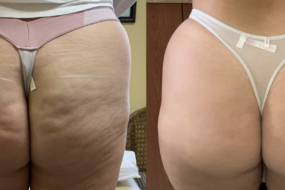
Picture this: two images side by side—one of an untouched, real human thigh showing its texture, and another digitally smoothed to perfection. We're bombarded by the latter in ads, on social, even in “authentic” influencer posts.
Now consider this data:
- 92% of plastic surgeons and dermatologists confirm that cellulite is not a flaw and cannot be blamed on lifestyle choices
- 60% of U.S. women feel personally responsible for their cellulite, often experiencing unnecessary shame or blame
These aren’t just numbers—they represent a huge gap between biological reality and cultural perception.
Flipping the Script: Actionable Ways to Reframe Cellulite
You can start shifting the narrative right now.
Try:
- Calling out unrealistic images whenever you see them—especially at work or online
- Framing conversations around “normal skin texture” instead of “imperfections”
- Championing body diversity in your content, campaigns, or hiring decisions
If you work in marketing, consider how a single campaign celebrating real skin texture can move your brand—and your audience—forward.
Championing True Aesthetics
Today's beauty trends are changing fast, with more brands and individuals celebrating natural skin.
Here are a few actionable shifts you can drive:
- Support brands and influencers using unedited, diverse images
- Echo body-positive messages in social streams and internal comms
- Educate teams and customers about the real science—cellulite is simply part of almost every woman’s anatomy
Honoring biological variation doesn’t just help individuals thrive, it sets new standards for industries and shifts public dialogue for good.
Cellulite is a powerful reminder: what’s most common is often most stigmatized. When you acknowledge its biological roots and push for visible diversity, you transform the narrative from shame to strength—one image, post, or conversation at a time.
Conclusion
Seeing cellulite through a scientific, cultural, and psychological lens gives you powerful tools to shift not just your perception, but also the wider conversation in your circles and industry.
You have the chance to move from internalizing manufactured shame to championing real, visible diversity in every space you touch—from content and campaigns to conversations with friends and colleagues.
Key Takeaways:
- Challenge unrealistic standards by questioning and calling out edited or artificial images in your feeds and projects
- Frame dialogue around “normal variation” instead of “imperfection,” both at work and in everyday life
- Integrate body diversity into campaigns, team decisions, and content creation
- Prioritize fact-based messaging—share the anatomy and science behind cellulite instead of reinforcing outdated myths
- Stay skeptical of “miracle” solutions and advocate for transparency in beauty and wellness marketing
Next Steps:
- Audit your digital content and brand messaging for language or visuals that reinforce stigma—swap them for honest, diverse representation
- Start one conversation this week highlighting the real biology of skin texture, whether on social media or with your team
- Support brands and creators who showcase unedited, authentic bodies
- Educate your network: Share a science-backed fact about cellulite to help others unlearn the shame
Every shift you make—whether it’s an honest post, an inclusive campaign, or a single conversation—chips away at outdated narratives and builds a more authentic beauty culture.
What’s most common is often most stigmatized, but you have the influence and information to rewrite the story.
Let’s make real skin, real science, and real confidence the new standard—because authentic beauty doesn’t need editing.