
Key Takeaways
Curious if you’re in the high-risk group for cellulite? Here’s your practical cheat sheet—demystifying the true drivers behind dimples and spotlighting what you can control. We’ve distilled the must-know facts and real-world strategies for assessing and managing your risk, so you can focus on what matters most (and tune out the noise).
- Gender is the No. 1 Risk Factor: 80–90% of postpubertal women develop cellulite due to unique skin structure and estrogen-driven fat storage, while men’s risk remains under 10%.
- Family History Matters More Than Fitness: If cellulite runs in your family, you’re far more likely to see it—genetics and inherited connective tissue structure outweigh lifestyle alone.
- Hormonal Changes Trigger Flare-Ups: Puberty, pregnancy, menopause, and birth control can all amplify cellulite by impacting fat distribution and skin elasticity.
- Body Composition Isn’t the Whole Story: Even lean, athletic individuals can have cellulite—it's about how subcutaneous fat and skin elasticity interact, not just body weight.
- Lifestyle Moves the Needle: Processed diets, sitting for hours, and smoking raise your risk, but regular activity, hydration, and fresh foods can help support healthier skin texture.
- Ethnicity Shifts the Odds: Caucasian women top the risk charts (up to 98%), while rates are much lower in East Asian and African American women—skin structure and genetic factors matter.
- Myths Don’t Hold Up: Cellulite isn’t a sign of poor health, laziness, or a weight problem—it’s a biological norm for women, including those who live healthfully.
- Your Action Plan Starts Here: Assess modifiable risks like daily movement and stress; then, focus on small, sustainable changes that support skin strength and circulation.
Ready to understand your unique risk profile and take realistic steps? Dive into the full article for a smarter, kinder approach to cellulite management—backed by science, not shame.
Introduction
You might be surprised to learn that up to 90% of women will spot cellulite at some point—regardless of age, fitness level, or lifestyle. If you’ve ever wondered why those stubborn dimples appear even when you’re crushing your workouts and tracking every kale salad, you’re definitely not alone.
Picture this: you’re sitting at your desk after a video call, scrolling through your inbox, when you catch a glimpse of your thighs and wonder—“Am I really doing everything right?” Here’s the reality: cellulite isn’t a failure of willpower or proof that you’ve missed some secret wellness hack. Instead, it’s a perfect example of how biology, daily habits, and genetics work together in ways most people never explain clearly.
That’s why understanding your own risk factors is such a game-changer. When you can pinpoint which dials you can actually turn—like how you move, what you eat, or how you manage stress—you can ditch the guesswork and finally make choices that fit your real life.
Here’s what we’ll unpack together:
- Which factors you can control (like activity and nutrition), and which ones are hardwired (think gender, age, genetics)
- How hormones, life stages, and even cultural background shape your cellulite risk
- Which everyday habits and unexpected triggers might shift your odds without you realizing
- Simple, actionable ways tech-savvy pros can assess and manage their personal risk map—without pressure or myths
By the end, you’ll have a practical framework—more dashboard, less drama—to spot your unique cellulite risk mix and set smarter, more sustainable habits going forward.
Curious where you land on the risk spectrum—and which factors are actually in your hands? Let’s get straight to the science and the real-world strategies that actually make a difference.
Understanding Cellulite Risk: What Makes Someone More Likely to Develop It?
Cellulite isn’t just about what you eat or how much you exercise—think of risk factors like ingredients in a recipe. Some you can adjust, others are baked in from birth.
If you picture a control board, modifiable factors are like sliders you can tweak: your diet, activity level, and daily habits. Non-modifiable factors—age, gender, genetics—are more like pre-set switches. You can’t change those, but knowing which ones are “on” for you can make a huge difference in what steps you take next.
What Actually Causes That Dimpled Look?
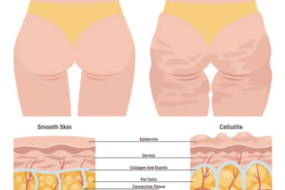
Here’s the quick science: cellulite forms when fat pushes through fibrous bands deep under the skin (think: a mattress with uneven stuffing). It’s not caused by “toxins,” and yes, it can happen to absolutely anyone.
Understanding your unique mix of risk factors means you can spot the pieces you can influence—and stop blaming yourself for what you can’t.
Modifiable vs. Non-Modifiable Risk Factors
Non-Modifiable:
- Gender: Being female increases risk dramatically (80-90% of postpubertal women vs. <10% of men)
- Age: Peaks in your 20s–30s and worsens over time
- Genetics: Family history matters—a lot
Modifiable:
- Body fat and distribution: You can influence, but not entirely control, where and how fat is stored
- Lifestyle: Diet, physical activity, sitting habits, and smoking all play a role
Why This Knowledge Counts
Imagine this: a 27-year-old, tech-savvy professional notices new dimples on her thighs, even though she runs regularly and eats clean. No, she’s not doing anything “wrong”—her genes and hormones are simply driving the show.
Cellulite is common, universal, and not a sign of poor health or failure. Knowing what’s in your control puts personalization—rather than shame—at the center of prevention and management.
In short: everyone has a different set of dials on their cellulite risk control board. Spot which you can move, make those work for you, and stop losing sleep over the ones you can’t. That’s smart, actionable self-care—no matter your starting point.
The Big Six: Major Risk Factors for Cellulite
Gender Differences and Why Women Are More Prone
Cellulite plays favorites, and the odds are stacked against women—80–90% of postpubertal women will spot those telltale dimples.
That’s thanks to skin structure: women’s vertical connective tissue bands (septa) let fat push up toward the skin, while men have a crisscross pattern that holds things in place.
- Estrogen also drives fat storage to the hips, thighs, and buttocks.
- In men? Cellulite is rare (less than 10%) and mainly linked to hormonal imbalances.
“If you’re female, you’re in the majority when it comes to cellulite risk.”
Genetics: The Role of Family and Inherited Traits
Ever look at your relatives and wonder why you share more than just their sense of humor? Genetics help shape your fat distribution and connective tissue strength—two pillars of cellulite.
- Cellulite runs in families, hinting at a hereditary link.
- Specific genes, like ACE and HIF1a, are tied to higher risk.
- Even fit, lean people can thank genetics for “inherited dimples.”
Imagine: “If your mom or grandma had cellulite, there’s a good chance you’ll see it, too.”
Age and Hormonal Shifts: When Cellulite Tends to Appear
Cellulite often debuts after puberty and loves to stick around as you age.
- Estrogen surges—during puberty, pregnancy, birth control use, and menopause—change fat storage and water retention.
- Aging skin loses collagen and thins, making dimples more visible.
- It's most pronounced in women 20–30+ and tends to worsen with time.
“Picture this: your skin's support network slowly relaxing its grip over the years.”
Ethnicity and Demographics: How Rates Vary
Not all groups face cellulite equally.
- 85–98% of Caucasian women experience it at some point.
- East Asian and African American women have significantly lower rates.
Key stats by group:
- Caucasian women: 85–98%
- East Asian women: much lower (often estimated below 40%)
- African American women: rare (well under 10%)
- Men, all ethnicities: under 10%
Genetic makeup and skin structure help explain these shifts.
Body Fat, Weight, and Distribution
Think cellulite only troubles people carrying extra pounds? Not so fast.
- Higher body fat and BMI magnify dimpling, but…
- Even lean athletes can spot cellulite—it’s about subcutaneous fat layout and skin elasticity.
- Muscle tone and skin thickness also change the playing field.
Scenario: “You run marathons but still have cellulite? Welcome to the club—body composition is only part of the picture.”
Lifestyle and Diet: The Impact of Daily Choices
The choices you make every day can nudge your cellulite risk up or down.
- Sedentary lifestyles and processed, high-salt/high-carb diets can worsen the look.
- Alcohol, smoking, and chronic stress weaken skin’s connective tissue.
- Regular movement, fruits and veggies, and better hydration may help reduce risk.
“Want to dial down your risk? Try swapping a screen break for a walk and loading your plate with more greens.”
Recognizing these six factors is your first step to understanding why cellulite happens—and shows that while some risks are pre-set, healthier habits can nudge those dials in your favor.
Hormones, Life Stages, and Cellulite Progression
High-Estrogen States: Puberty, Pregnancy, Contraceptives
When it comes to cellulite, hormones are major players—especially estrogen.
Picture this: during puberty, your body cranks up the estrogen dial, triggering changes in fat storage, water retention, and connective tissue. That’s why many women first notice cellulite as teens.
Periods of high estrogen—including pregnancy, starting contraception, or hormone therapies—often make cellulite more visible. This happens because:
- Estrogen boosts fat accumulation around your thighs, hips, and buttocks
- It leads to looser connective tissue, making dimpled skin more likely
- Water retention increases, exaggerating the bumpy look
Ever started a new birth control and noticed more dimples? You’re not alone. These hormonal surges shift how your body stores fat and structures the skin’s support system.
Stat to remember: Up to 90% of women develop cellulite after puberty, mostly driven by these hormonal waves.
Menopause and Aging: Shifting Risks Over Lifespan
As you approach menopause, your body flips yet another switch—this time dialing down estrogen.
Here’s what changes in peri- and menopausal women:
- Collagen production drops, causing the skin to thin and lose stretchiness
- Connective tissue weakens, letting fat push through more easily
- Fat distribution shifts, sometimes leading to a more “padded” appearance
The result? Age can magnify cellulite—especially if you already had some earlier in life. Think of skin as a mattress: as it loses padding (collagen), lumps and bumps become harder to hide.
Data shows most cases peak between ages 20 and 30, but cellulite often becomes even more pronounced later on, thanks to both hormonal shifts and natural aging.
Your Cellulite Timeline: What To Expect
- Teens & 20s: Cellulite first appears, usually after puberty
- Pregnancy & Hormone Changes: Flare-ups are common
- 30s, 40s, and Beyond: Skin thins, collagen drops, dimpling may increase
- Menopause: Risk and visibility both rise, with changes in skin and fat placement
If you notice more cellulite during life’s milestones, it’s not just you—hormonal shifts set the stage for nearly all women. The biggest takeaway: your body’s natural cycles shape your skin’s story, with some changes completely out of your control.
Shareable truth: “Cellulite is a natural side effect of being human—especially for women navigating hormonal changes through life.”
Populations Most at Risk: Who Sees Cellulite Most Often?
Demographic Snapshots: Who Tops the List?
If you’ve ever wondered, “Is it just me?”—you’re far from alone. Cellulite is the default, not the exception, for certain groups.
Up to 98% of Caucasian women over 20 will see cellulite at some point. Now, imagine a room full of 100 women—statistically, just two will leave without ever spotting those classic dimples.
Even among the athletic or genetically blessed, biology wins out. Cellulite favors certain groups no matter how healthy their lifestyles may be.
Comparative Prevalence: Age, Gender, and Ethnicity
Let’s break it down for quick scanning:
- Age:
- Most common in adults 20+, with risk peaking in the 30s and beyond
- Rare in children and teens before puberty
- Gender:
- Affects 80-90% of postpubertal women
- Under 10% of men will ever develop noticeable cellulite
- Ethnicity:
- Highest rates in Caucasian women (85–98%)
- Much lower in East Asian and African American women
- BMI/Body Composition:
- More visible in those with a higher BMI or greater subcutaneous fat
- Even lean or athletic people get cellulite—body composition and skin elasticity matter just as much
- Pregnancy and Hormonal Changes:
- Pregnancy, birth control, and hormone surges make cellulite more likely or pronounced
Up to 9 in 10 women worldwide will see cellulite by age 30.
“Don’t blame your fitness tracker—cellulite plays by its own rules.”
“Yes, even Olympic sprinters sometimes spot cellulite. It’s not about effort, it’s about biology.”
Why Most Men and Kids Steer Clear
For men and prepubertal children, the numbers drop off a cliff. Men’s skin structure (crisscross septa) and lower estrogen levels act as natural barriers. Kids? Until puberty revs up the hormones, their risk is close to zero.
Picture this for a moment: Two friends, one male and one female, both follow similar routines and diets—but only one is likely to ever deal with cellulite. It’s not unfair, it’s just genetics and skin physics in action.
Knowing who's most at risk turns vague worries into clear, actionable knowledge. If you spot cellulite, odds are you’re perfectly normal—just in the majority. If you’re not in a high-risk group, consider yourself one of the statistical rarities.
Beyond Biology: Biomechanical and Environmental Influences
Skin Structure and Physical Factors
Cellulite isn’t just about “having extra fat”—it’s deeply tied to how your body’s connective tissue is built.
Beneath your skin, fat cells sit in tiny chambers formed by fibrous septa (think of connective tissue bands). In women, these septa run vertically, which makes it much easier for fat to poke up and create those familiar dimples.
Picture this: it’s the difference between a net stretched tightly across a bowl (smooth surface) versus loosely holding marbles (dimpled result). If your “net” is looser or more vertical, the dimpling appears much more easily.
- Women’s vertical septa = higher risk (80-90% will see cellulite after puberty).
- Men’s crisscross septa = natural smoothing, under 10% affected.
What you’re seeing isn’t just fat, but the effect of skin structure, connective tissue strength, and how snugly it holds fat cells.
Environment, Habits, and Long-Term Effects
Lifestyle and daily habits can dial your risk up or down—sometimes in ways you don’t notice until years later.
- Wearing tight clothing (like compression leggings or skinny jeans) can reduce micro-circulation, subtly increasing dimpling over time.
- Sitting for hours at a desk places constant pressure on specific skin zones, which may worsen the appearance of cellulite.
Think about modern life: urbanization, higher stress, and less movement all stack the odds. Researchers notice a rise in cellulite prevalence alongside sedentary jobs and digital-first lifestyles.
- One small study found that switching from sitting all day to just 30 minutes of walking reduced local swelling and improved skin smoothness in 2 weeks.
- Anecdotally, women who improved hydration, varied their movement, and avoided daily tight clothes saw noticeable differences in skin texture.
Real-Life, Real-World Connections
“Your skin is like a living roadmap—every daily habit leaves its mark.”
“Cellulite is a reminder that body structure and environment both matter—no single ‘quick fix’ tells the full story.”
Picture this: you’re lounging on the couch in compression yoga pants, munching on salty snacks—fast forward ten years, and your skin may quietly reflect these routine choices.
Skin structure sets the stage, but your environment and movement patterns decide how the show unfolds. Want to tweak the odds? Add more variety in posture and movement, stay hydrated, and loosen up those tight spots whenever you can.
Frequently Overlooked Risk Factors and Myths
Let’s get one thing straight: cellulite isn’t just a “weight problem” or the result of careless choices. If you’ve ever thought, “I work out and eat pretty well—why do I still have cellulite?” you’re definitely not alone.
Many people picture cellulite as a badge of poor habits. Reality check: up to 90% of women, including athletes and the super-fit, see those dimpled spots at some point. It’s a structural issue, not just about fat.
Busting the Biggest Myths
You might’ve heard these before—let’s clear them up for good:
- “Only overweight people get cellulite.”
Not true. Lean, muscular women often have visible cellulite, thanks to skin structure and inherited factors.
- “It’s just about diet or laziness.”
Lifestyle plays a role, but genetics and hormones are in the driver’s seat for most cases.
- “If you have cellulite, you’re unhealthy.”
Cellulite is not a sign of poor health—it’s a normal variation in skin and fat, not a flaw.
Picture this: a duo of friends, one with a high-powered gym routine and the other with a Netflix marathon habit—both can develop cellulite thanks to what’s written in their DNA.
Under-the-Radar Contributors
Several less obvious risk factors can quietly raise your odds, even if you’re ticking every “healthy” box:
- Poor lymphatic drainage (think fluid buildup that increases puffiness and dimpling)
- Chronic inflammation from food sensitivities or stress
- Certain medications like hormonal contraceptives, steroids, or antidepressants that affect hormones or tissue structure
Even your posture (sitting all day), tight clothing, or high-stress urban living can contribute over time by affecting circulation or connective tissue health.
What You Can—and Can’t—Control
If you’re frustrated seeing cellulite stick around despite your best efforts, know this: some factors are simply out of your hands. The science shows even meticulous lifestyle choices only move the needle so far.
The key takeaway? Blame biology, not willpower—and remember, most women are in this together. Instead of chasing perfection, use what you can control (like movement and nutrition) and cut yourself some slack on the rest.
Practical Strategies for Assessing and Managing Personal Risk
Taking charge of your cellulite risk starts by understanding the factors that matter most. Think of your risk profile as a custom dashboard—some dials you can adjust, others are locked from the factory.
If you're curious where you stand, grab a mental notepad and ask yourself these self-assessment questions:
- What’s my age and gender? (Women over 20 are in the highest risk group; men and prepubertal folks are rarely affected.)
- Is there a history in my family? (If your mom or sisters have cellulite, you’re statistically more likely to see it too.)
- What’s my body composition? (Higher subcutaneous fat raises the odds, but even lean, fit people can spot those dimples.)
- Do I notice cellulite more after major hormonal changes? (Think puberty, pregnancy, changing birth control, or menopause.)
- How active am I, and what does my daily routine look like? (Sedentary habits, stress, and highly processed diets are known accelerators.)
- What’s my ethnic background? (Caucasian women: up to 98% see cellulite. It’s notably lower among East Asian and African American women.)
Realistic Moves You Can Make Right Now
You can start dialing down manageable factors with a few straightforward lifestyle shifts.
Here’s what often helps:
- Move more: Even a lunchtime walk or standing desk breaks can improve circulation.
- Swap processed snacks for fresh options: Veggies, lean proteins, and hydration can strengthen skin and connective tissue.
- Cut back on sodium and alcohol: Both can trigger fluid retention and inflammation, making dimpling appear worse.
- Quit smoking and manage stress: Chronic exposure can weaken connective tissue, making you more vulnerable.
Remember, cellulite is not a personal failing—it’s a routine part of human biology, especially for women. Picture this: two friends, one with a high-powered gym routine and another who prefers reading marathons, can both have cellulite due to genetics or hormonal shifts.
Setting Up Your Long-Term Plan
Ready to get proactive? Use these steps to guide your approach:
- Rate your modifiable risk factors (activity, diet, stress) and choose one area to target this week.
- Track hormonal milestones—if you notice changes after pregnancy or a new prescription, jot it down.
- Consider a candid chat with your healthcare provider if you’re unsure what’s within your control.
The most sustainable improvements come from small, consistent lifestyle tweaks—perfection is not required. For a deeper dive, explore our guides on hormone management, proven prevention habits, and treatment options.
If you want to personalize your cellulite strategy, focus on habits you can shape while giving yourself grace for the factors you can’t. That’s the best—and most realistic—risk management you can practice.
Conclusion
Understanding your personal risk factors for cellulite means you’re no longer chasing myths—you’re choosing smart, science-backed self-care. Where some factors are out of your hands, a handful of daily decisions can make a measurable difference.
Every woman’s skin story is unique, and knowing what you can (and can’t) tweak is the first step toward real confidence. No more wasted energy on shame—just focus on the actions that actually move the needle.
Practical Takeaways:
- Embrace your biology: Recognize which risk factors are fixed (like genetics and gender) and stop blaming yourself for them.
- Prioritize movement: Add small bursts of activity to your day—even a short walk or stretch break counts.
- Upgrade nutrition: Swap processed foods for more fruits, veggies, and hydration to support connective tissue and skin health.
- Watch your habits: Loosen up on tight clothing and rethink long periods of sitting to improve circulation.
- Track hormonal triggers: Take note of life phases or medications that coincide with changes in your skin.
Next Steps:
- Pick one lifestyle tweak you can start today—walk after lunch, hydrate more, or add leafy greens to your meal.
- Reflect on your personal risk “dashboard”—identify which dials you can turn up or down for your situation.
- Share what you’ve learned with a friend—remind someone else that cellulite is normal and not a reflection of effort or worth.
- Dig deeper: Explore our linked guides for hormone health, prevention habits, and expert strategies tailored for you.
You’re in charge of your journey—not by aiming for perfection, but by making simple, empowered choices that fit your life.
“Cellulite isn’t a flaw—it’s a feature of human biology. Own your skin’s story and focus on what you can change—starting today.”