Key Takeaways
Curious where cellulite actually appears—and why? Here’s your rapid-fire guide to how your body’s unique “terrain” sets the stage for cellulite, which spots are most impacted, and what you can do with that knowledge. Scan these bold insights to get actionable, body-specific clarity in seconds.
- Thighs and buttocks are cellulite’s main headquarters, with 80–90% of women developing dimples here thanks to a high fat-to-muscle ratio and vertical connective tissue bands.
- Hormones drive fat storage to “hotspot” zones—estrogen and progesterone steer fat toward the hips, thighs, and butt, amplifying dimpling especially after puberty, pregnancy, or menopause.
- Genetics determine your body map, so if your family has cellulite in specific places, you’re more likely to notice it in the same regions.
- Cellulite shows up first where fat sits just under the skin, like the back or outer thigh and upper buttocks, while areas with tighter, crisscrossed connective tissue (like men’s skin or the face) are nearly immune.
- Less common zones—upper arms, abdomen, and breasts—see milder or later-onset cellulite, often linked with aging, skin thinning, or major hormonal shifts.
- Cellulite is almost never found on the face, hands, or feet because these areas lack the right fat structure and have denser connective tissues that prevent dimpling.
- Appearance and depth of cellulite vary by location: Thighs and buttocks develop deeper “orange peel” dimples, while arms or abdomen show softer, wavier textures—knowing your pattern helps target the right solutions.
Ready to pinpoint and tackle your unique cellulite “map”? Dive into the full article to unlock science-backed strategies and tailored tips for your body’s hotspots.
Introduction
Ever find yourself scrutinizing your legs in good lighting, only to spot those familiar dimples staring back? You’re far from alone—more than 80% of women will experience cellulite in their lifetime, often in the exact same frustrating spots.
But why does cellulite always seem to pick favorites—like your thighs, butt, and hips—while areas like your arms or face stay mostly untouched?
It’s not just genetics or age; there’s real science behind where cellulite appears (and why it skips certain zones altogether).
For anyone juggling visual content, crafting wellness posts, or simply curious about their own body “terrain,” knowing the most impacted areas means you can:
- Save time by focusing prevention or treatment efforts where results will show
- Demystify how anatomy, hormones, and gender shape your skin’s texture
- Spot patterns with confidence, instead of second-guessing every new “bump”
Cellulite showcases fascinating patterns—from the classic “orange peel” on thighs to the rare but real waves on upper arms or abdomen. Yet, it’s almost unheard of on your face, hands, or neck.
Understanding this distribution can help you:
- Develop sharper, more relatable visuals for your audience
- Make smarter lifestyle or content decisions based on actual biology
- Remove the guesswork from tracking or treating those changes
Curious to see how your body’s framework, hormones, and even evolution all play a part? Ahead, we’ll map out exactly why cellulite lands where it does—and what that means for your skin, confidence, and toolkit moving forward.
Ready to rethink cellulite as a map, not a mystery? Let’s explore the “terrain” and see why certain regions become hotspots, paving the way for smarter tracking, prevention, and self-acceptance.
Understanding Cellulite Distribution: Why It Appears Where It Does
Cellulite doesn’t play favorites—it tends to appear in very specific spots thanks to your body’s own blueprint. Thighs, buttocks, legs, and hips stand out because of their natural landscape: they’re where your body stores the most subcutaneous fat.
Picture this—cellulite is like hills and valleys on a map. Some regions have the ideal “terrain” for those textures to form.
Anatomy and Hormone Power: Mapping the Terrain
Here’s why these areas are hit first:
- Higher fat-to-muscle ratio under the skin creates more volume for cellulite to appear
- Connective tissue bands (aka fibrous septa) run vertically in women, making fat bulges more visible than in men
- Hormones like estrogen guide fat storage and affect circulation changes, amplifying the effect
What’s especially wild? A whopping 80-90% of postpubertal women develop cellulite, compared to much lower rates in men.
Genetics and Gender: The Blueprint Behind the Bumps
There’s a real genetic lottery at work too. If your mom or sisters have cellulite, odds are higher you’ll see it show up.
Now, gender matters a ton:
- Women’s connective tissue structures line up in vertical columns, which “open the door” for that dimpling effect
- Men’s fibrous bands crisscross, creating a tighter net that holds fat deeper (hello, smoother skin)
This isn’t just about biology, but evolution: female bodies are primed to store more fat just beneath the skin for reproductive reasons.
Real-World Cellulite Examples (and What They Teach Us)
Ever notice cellulite shows up first on the back or sides of your thighs? That’s because those spots combine high fat content and less supportive connective tissue. The face stays mostly untouched—there’s just not enough subcutaneous fat or loose connective bands.
So, to spot where cellulite will appear, look for:
- Areas with higher fat deposits
- Weaker, vertically aligned connective tissue
- Active hormonal influences (think: puberty, pregnancy, menopause)
In a nutshell, cellulite isn’t random—it’s about anatomy, hormones, and genetics teaming up. If you picture your body as a “terrain map,” the rough spots are exactly where hills and valleys naturally form. Knowing this lets you focus any prevention or treatment efforts right where they’ll have the most impact.
Primary Cellulite Hotspots: Thighs, Buttocks, Legs, and Hips
Thighs: The Classic Cellulite Zone
If you imagine cellulite as “hills and valleys on a map,” the thighs are the ultimate rugged landscape.
Why? The thighs have a high fat-to-muscle ratio, and that fat sits just beneath the skin, stacked against vertical bands of connective tissue.
Estrogen plays a huge role, encouraging both fat storage and subtle changes in circulation, especially after puberty.
That’s why up to 90% of postpubertal women experience thigh cellulite.
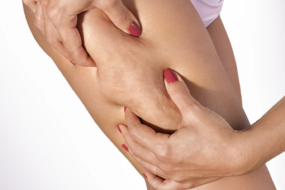
You’ll almost always spot those dimples on the back or outer side of the thighs first—picture sitting down at the beach and seeing the pattern emerge in certain light.
Here’s what’s happening:
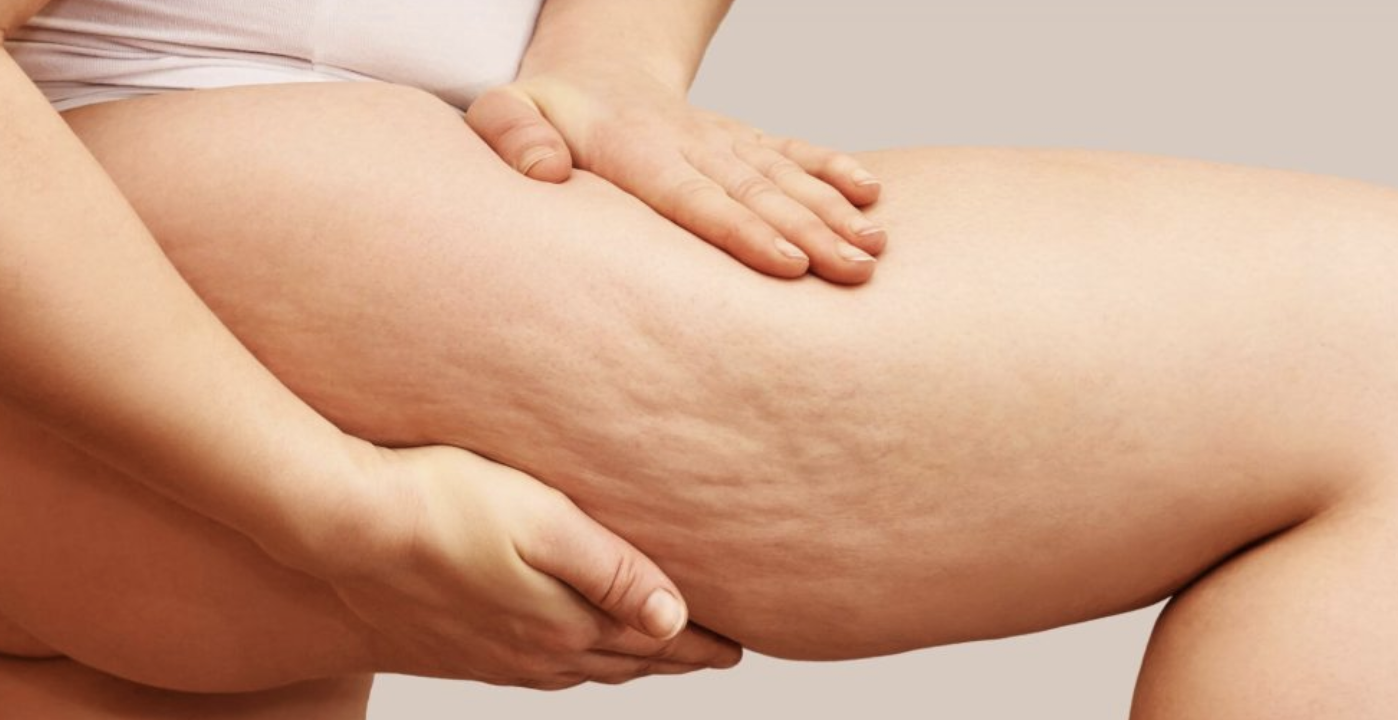
- Vertical connective bands pull down the skin, creating an “orange peel” or “cottage cheese” effect
- Hormonal shifts boost fat accumulation and alter microcirculation
- Genetic factors make some thighs more cellulite-prone than others
Buttocks: Why It's a Common Target
The buttocks are practically destined for cellulite—fat deposits stack right below the skin and over the gluteal muscles, making any structural changes instantly noticeable.
Over time, connective tissue bands lose elasticity, tightening and enhancing dimpling with age.
It’s not just speculation: 80-90% of women notice cellulite on their buttocks at some point, making it a nearly universal pattern.
Distinct variations show up—sometimes in smooth waves, other times in deep, focused dimples.
You might even recognize different texture patterns on the upper vs. lower buttocks.
Legs and Hips: Beyond the Core
Cellulite doesn’t stop at the thighs.
For many, it travels down the legs and wraps around the hips, especially in areas where genetics dictate extra storage.
Key differences across the legs and hips:
- Circulation and activity level can make cellulite more or less visible
- Genes and fat storage patterns mean some experience dimpling all the way to the lower calves, while others see it only at the hips
- Broader hips and waistlines—common in women—tend to host more pronounced cellulite texture
Picture this: Standing in a fitting room, the light glances off your outer hip while slight shadows reveal new dimples—it’s all about angles, genetics, and movement.
Whether you see the classic “cottage cheese” on your thighs, deep dimples on your buttocks, or faint ripples along your hips, these zones lead the list for cellulite.
Knowing your main hotspot helps you target solutions that fit your unique body map, whether for monitoring changes, trying treatments, or building confidence around what’s completely normal.
Less Common Cellulite Locations: Arms, Abdomen, and Breasts
Upper Arms: Cellulite in Aging and Skin Changes
Cellulite tends to sneak up on the upper arms as we age—often catching people by surprise.
Aging brings thinner skin and decreased muscle tone, making it easier for fat cells to push through and create that familiar dimpling.
Unlike the thighs or buttocks, arm cellulite usually appears:
- Later in life, especially as estrogen drops post-menopause.
- In areas with natural loss of muscle tone (think: triceps, outer upper arm).
- Alongside other changes like looser skin, which amplifies the effect.
If you’ve noticed your arms looking less smooth after 40, you’re not alone—picture the soft outlines and rippling textures on the underside of the bicep.
Cellulite on the arms is often milder than on the legs but can still impact confidence, especially in sleeveless outfits.
“Aging doesn’t just show up on your face—your arms can reveal skin and fat structure changes, too.”
Abdomen and Breasts: The Unusual Suspects
It’s not just your core workouts that shape your stomach—some people are surprised to spot cellulite on the abdomen or even on the breasts.
While these spots are less common than hips or thighs, they’re not unheard of, especially if:
- You store extra fat in the belly or lower abdomen.
- There’s looser connective tissue after pregnancy or weight changes.
- Fluctuations in hormones thin the skin or alter fat distribution.
Breast cellulite remains rare, mainly because there’s a unique combination of glandular and fatty tissue, plus denser connective fibers that resist dimpling.
You’re most likely to see subtle waviness or tiny dimples near the sides of the breast or beneath the bra line.
“Cellulite on the breasts is unusual, but body changes—think hormonal shifts or pregnancy—can make it possible.”
Quick Reference for Hard-to-Spot Cellulite
Here’s how to identify and track these less common cellulite zones:
- Inspect your upper arms with arm raised in good daylight—look for soft, uneven skin texture.
- For the abdomen, pinch the skin near the lower stomach when standing—any wavy patterns may be subtle cellulite.
- On the breasts, gentle pressure on the side or beneath will best reveal changes.
None of these areas are immune—hormones, aging, and body composition all play their part.
Cellulite isn’t just a “lower body thing,” and catching subtle changes early lets you tailor lifestyle tweaks or targeted treatments as needed. Picture yourself confidently wearing short sleeves or a swimsuit, knowing you’ve decoded what’s happening underneath.
Rare and Atypical Sites: Examining the Face and Other Uncommon Areas
When people picture cellulite, they think thighs, butt, or hips—not their face. But why is facial cellulite practically unheard of?
It comes down to anatomy: your face just isn’t built for it.
Why Cellulite Skips the Face
The face has minimal subcutaneous fat, especially compared to the thighs or buttocks.
Under the skin, connective tissue structure is tighter and more interwoven, making it far less likely for fat cells to poke through and create that signature dimpled look.
- Body areas with more fat: Thighs, butt, abdomen
- Face: Less fat, denser connective network
This structural setup is why even as cellulite impacts up to 90% of women on their lower body, it remains a non-issue for your cheeks or jawline.
Uncommon and Resistant Regions: What Makes Them Different?
Besides the face, there are a few other spots where cellulite is almost a no-show:
- Hands and feet rarely develop cellulite—the skin’s thin and the underlying fat layer is shallow.
- Neck and upper back: Connective tissues are arranged in ways that resist dimpling, and there’s minimal fat storage.
Picture this: even with major body changes (like weight gain), it’s exceedingly rare to see cellulite outside the usual suspects.
Data shows no facial cellulite reported in medical literature, and mentions of neck or hand cellulite are virtually absent from studies.
The Anatomy Behind Resistance: A Visual Analogy
Think of cellulite as hills and valleys—it forms where soft ground (fat) pushes up against a rigid layer (connective bands). On the face, the “ground” is rocky and firm, so those hills never form.
In technical terms:
- Vertical connective septa (thighs, buttocks): prone to dimpling
- Crisscross or web-like structures (face, neck, feet): reinforce evenness, preventing lumps
“Most people can ignore their reflection when it comes to cellulite—your face just doesn’t play by the same rules as your thighs.”
Fast Facts and Actionable Takeaways
- Cellulite is almost never found on the face, neck, hands, or feet—the structure just doesn’t allow for it.
- If you notice new dimpling somewhere truly unusual, it’s worth investigating with a specialist, as it might not be classic cellulite.
- For visual content: clearly mapped body diagrams can highlight the “dead zones” where cellulite can’t survive.
Cellulite knows its territory and rarely ventures beyond the common hot zones—with the face, neck, and extremities enjoying near-total immunity thanks to their unique anatomical blueprints.
Mapping the Gender Divide: Why Female Bodies Are More Prone
When it comes to cellulite, the gender gap is both real and visible.
Roughly 80-90% of women will see some form of cellulite after puberty, compared to a much smaller percentage of men.
That’s not just a random statistic—it’s about biology.
The Connective Tissue Difference: Crisscross vs. Vertical
Picture this: if your skin was a mattress, the structure underneath would determine how smooth or lumpy it looks.
- In women, the connective tissue (called fibrous septa) runs vertically, like parallel lines.
- In men, those fibers form a tough, crisscross mesh—more like a sturdy lattice than straight lines.
This means that in women, fat cells can push up through the gaps, causing those familiar dimples, while men’s crisscrossed structure is better at containing them.
Hormones: Estrogen, Progesterone, and the Cellulite Equation
Hormones play a starring role and not just during puberty.
- Estrogen encourages the body to store fat in thighs, hips, and buttocks—which are cellulite hotspots.
- Progesterone can weaken connective tissue, making skin less firm over time.
- As estrogen levels fluctuate (think pregnancy, birth control, menopause), circulation can slow down and fat cells may enlarge, leading to deeper dimpling.
Imagine a scenario where hormonal changes shift the “terrain,” making the landscape even more uneven.
Key Stats and Trends: Women vs. Men
Women’s cellulite prevalence is dramatically higher:
- 80-90% of women experience thigh or buttock cellulite.
- Far fewer men do, mainly those with higher estrogen levels or specific genetic traits.
Men’s “crisscross” tissue is like nature’s built-in anti-dimple network—while women’s vertical bands invite more texture.
What You Need to Know
If you’ve ever thought, “Why me and not him?”—the answer is right under your skin.
It all comes down to connective tissue patterns, hormone-driven fat storage, and subtle anatomical structures.
For anyone tracking changes or seeking treatments, knowing these gender-specific differences can shape your approach and expectations.
Variations in Cellulite Appearance Across Different Areas
Why Cellulite Looks Different Depending on Location
Cellulite isn’t one-size-fits-all. Its appearance shifts dramatically depending on where it shows up—think deep dimples on the thighs versus faint ripples on the arms.
The depth and severity of cellulite often comes down to a simple formula: skin thickness, fat density, and how your connective tissue is structured underneath.
Picture this:
- Cellulite on thighs and buttocks: Usually more noticeable, forming deeper “orange peel” or “cottage cheese” dimples.
- On arms and abdomen: Tends to look softer or wavier, sometimes just faint undulations, not classic pits.
What Drives the Differences? (It’s More Than Skin Deep)
The variance is driven by several factors:
- Skin thickness: Thicker skin, typically found on your thighs and buttocks, can make dimpling look deeper.
- Fat cell size: Larger fat deposits push up more forcefully, creating exaggerated texture.
- Connective tissue orientation: Vertical bands (more common in women) lead to dimpling, while crisscross patterns (typical in men) hold things tighter.
- Age and body composition: Loss of muscle tone and thinning skin over time make cellulite more visible, especially on the arms or abdomen.
You may notice, “Cellulite on your thighs might look lumpier than on your arms—here’s why: thicker tissue and larger fat cells ‘raise the hills’ higher.”
Area-Specific Treatment Response—What You Should Know
Some body regions respond better to interventions than others:
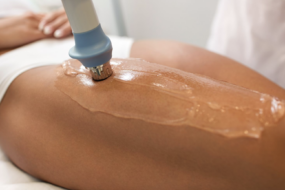
- Thighs and buttocks: Most responsive to treatments like massage, laser, and targeted exercise—because these areas have more fat to influence.
- Upper arms or abdomen: Changes may be subtler; skin quality and elasticity play a bigger role.
- Trendy focus: Many new treatments concentrate on thighs/buttocks, because that’s where 80–90% of cellulite occurs in women.
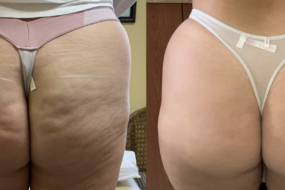
If you’re tracking your progress, try before-and-after photos or touch comparison—visual guides can help you see which areas are improving fastest.
Summary
Cellulite isn’t uniform—each area of your body tells a different story. Thicker skin and bigger fat pads (think thighs) equal deeper dimples; thinner skin (like on the arms) means a softer, wavier look.
To get real results, identify where you see the most change and target those “hotspots” with smart treatments and ongoing tracking.
Key Takeaway Locations: Most Impacted vs. Least Impacted Areas
When it comes to cellulite, location is almost everything.
Nearly 80-90% of women will spot cellulite on their thighs and buttocks at some point, making these the absolute hotspots.
That signature “orange peel” texture appears first where the fat-to-muscle ratio is highest and where hormonal shifts drive fat storage.
The “Usual Suspects”: Where Cellulite Shows Up Most
You’ll most commonly see cellulite in these areas:
- Thighs: Back and outer thighs develop dimples early, thanks to more vertical connective tissue bands.
- Buttocks: Fat sitting close to the skin is shaped by tight connective bands—picture a bumpy surface over soft hills.
- Hips and waist: Classic storage spots for women, tied to genetics and estrogen-driven fat distribution.
- Legs (including calves): While thighs get attention, the lower legs can also show subtle waviness, especially if there’s a family history.
Fun fact: “If you’re checking your progress in a mirror, the outer thighs and buttocks are almost always where you’ll notice cellulite first.”
Rare Sightings: Uncommon Locations That Surprise
Some body areas barely experience cellulite at all.
- Upper arms: Thinning skin with age may reveal some lumps, but this site is far less common than the thighs or butt.
- Abdomen and lower stomach: More likely post-pregnancy or with significant weight changes, but still less frequent.
- Breasts: Cellulite here is rare and usually linked to unique hormonal imbalances.
- Face: Virtually never affected—there’s just not enough subcutaneous fat or the right connective structure.
Quote this: “Spotting cellulite above the knee or on arms often signals changes in skin quality, not just fat distribution.”
How to Spot—And Track—Your Most Affected Areas
Do a quick “cellulite checkup” by:
- Noting where dimpling appears most prominent—usually thighs, buttocks, or hips for women.
- Looking for changes in skin texture after crossing legs, squeezing skin, or sitting—cellulite often becomes more noticeable in these scenarios.
- Taking progress photos under consistent lighting each month, which can help track changes you might not spot day-to-day.
Key tip: “Cellulite is an individual roadmap. Mapping your main affected zones (think: thighs, butt, hips) lets you target treatments and lifestyle tweaks where they’ll show the biggest difference.”
What stands out? Thighs and buttocks remain the most consistently impacted zones, while seeing cellulite on the face or breasts is a clinical rarity. Identify your own high-visibility sites so you can customize your approach and use interventions wisely—because when it comes to cellulite, knowing your map is half the battle.
Conclusion
Knowing exactly where cellulite shows up—and why—gives you a powerful edge in taking ownership of your body’s natural landscape. This “map” isn’t just about appearance; it’s a blueprint for building confidence, customizing self-care, and making smarter wellness choices.
You’re not at the mercy of chance. When you understand the interplay of anatomy, hormones, and genetics at specific sites, you gain options: targeted treatments, lifestyle tweaks, and a healthier dose of self-acceptance—all dialed to your unique body.
Actionable Takeaways
- Zero in on your “hotspots”: Focus your efforts on thighs, buttocks, and hips for the biggest impact.
- Track subtle shifts: Use photos or touch checks to monitor changes—data beats guesswork.
- Tailor your routines: Adjust workouts, skincare, and treatments to suit each area’s needs.
- Address hormonal health: Consider lifestyle moves that support hormone balance, which goes a long way for prevention and management.
- Normalize the journey: Remember, up to 90% of women experience some form of cellulite—empowerment comes from information, not shame.
Next Steps
- Map your own cellulite zones today and set realistic goals for targeted self-care.
- Try a new exercise or treatment this week focused on your top-affected area.
- Share what you’ve learned—help others decode their body map and cut through confusion.
- Bookmark this guide for future reference as your body changes over time.
Knowing your cellulite blueprint isn’t about “fixing flaws”—it’s a launchpad for smarter choices and authentic self-confidence. The next move is yours: get curious, get proactive, and shape a routine that works with your body, not against it.
Empowerment starts the moment you see your body not as a problem, but as a personalized map—one you get to navigate with confidence.