
Key Takeaways
Unlocking the science of dreams empowers you to understand your brain’s nightly creativity, emotional processing, and problem-solving superpowers. Here are the most valuable, actionable insights to help you leverage dream research for your well-being, creativity, and self-awareness—minus the myths and confusion.
- Dreams are your brain’s “imagination engine”—they combine vivid imagery, wild narratives, and intense emotions while logic takes a back seat during sleep.
- Dreaming happens in both REM and NREM sleep, with about 25% of your night spent in REM producing ultra-vivid, emotionally charged stories and NREM sparking shorter, less colorful fragments.
- REM dreams light up emotional and visual brain centers while “rational” brain regions go offline, making dreams feel real but break waking logic—think flying cats and impossible plot twists.
- Most dream content blends fragments of recent events and older memories, with only about 1.5% of dreams exactly replaying real life—your mind prefers mashups to reruns.
- Science debunks one-size-fits-all dream symbolism; instead, focus on the personal patterns, emotions, and creativity your dreams reveal, not generic meanings.
- Dreams may support emotional processing, creativity, and problem-solving, with studies showing REM sleep boosts creative insight by up to 30% over quiet rest.
- Practical dream reflection beats over-interpretation—use a quick dream journal to spot recurring themes and leverage insights for your work, writing, or self-growth.
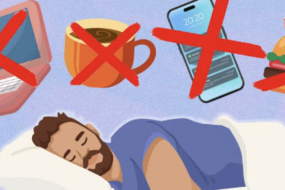
- Healthy sleep is the foundation for meaningful dreaming; optimize your sleep environment and routine to boost both dream recall and overall well-being.
By embracing these science-backed tips, you’ll tap into your brain’s nightly innovation lab—so dive deeper into the article to discover how dreaming can fuel your creativity, resilience, and self-understanding.
Introduction
Ever wondered why your brain spins wild midnight movies—like that time you woke up convinced you’d just pitched your startup to a talking dolphin? You’re not alone. Roughly 95% of adults report dreaming multiple times each week, yet most of us barely scratch the surface of what those dreams mean or why they happen.
For tech-savvy professionals and creative minds, dreams aren’t just late-night background noise—they’re a window into how the brain processes emotion, solves problems, and sparks innovation. Imagine a tool that:
- Remixes your toughest work challenges into fresh solutions
- Processes stress in the background, so you wake up ready for the day ahead
- Juices up creativity by lifting logic filters—sometimes leading to those “aha!” moments
Here’s a twist: REM sleep (the vivid dream phase) makes up about 25% of your night, yet science now shows the dream engine keeps humming in other stages too. It’s your mental sandbox—logic turned down, creativity unleashed—all while you get your rest.
But dreams aren’t just for poets or sleep scientists. If you’re the type to optimize workflows, build AI-driven automations, or wrangle content for a living, understanding the science behind dreams offers practical takeaways. Want to interpret that bizarre anxiety dream or turn a surreal snippet into your next brainstorm? There’s real research—no woo required—that’ll sharpen both your self-awareness and your strategy.
We’ll unpack:
- How neuroscience maps the stages and types of dreams
- Theories on what dream cognition really is
- Leading models for why we dream (hint: emotional processing, threat rehearsal, and pure brain “sandbox”)
- Myths vs. scientific realities on interpreting dream content
- Ways dream research connects to productivity, creativity, and everyday well-being
So, the next time your mind cooks up a neon-nighttime epic, you’ll know exactly what your brain might be up to—and how you can use that insight to level up both your workflow and your well-being.
Ready to explore how your “sleeping brain” becomes a nightly innovator? Let’s start with the basics: what science actually tells us about what dreams are—on both the surface and behind the scenes.
What Are Dreams? A Scientific Framework
Dreams are internally generated, sensory-rich experiences that your brain creates while you sleep.
Picture this: you’re flying over a neon city, your heart pounding with joy—yet you’ve never left your bed.
Dreams stand out for several core qualities:
- Vivid imagery: Sights, sounds, and feelings as real as waking life.
- Narrative flow: Story-like plots that bend reality.
- Emotional punch: From delight to anxiety, feeling is center stage.
- Bizarreness: Unexpected twists and surreal scenes are the norm.
Scanning your own mind, you’ll notice that dreaming is not the same as “thinking” or seeing mental images when you’re awake.
Waking thoughts are usually logical and linear, while dreams let creativity run wild with the usual reality checks turned off.
If you’ve ever woken up from a dream with a solution to a problem or a new creative idea, you’ve tapped into how dreams can fuel self-knowledge, spark innovation, and even support mental health.
“Dreaming is your brain’s built-in lab for imagination—unfiltered, unpredictable, and deeply personal.”
When Do We Dream? Mapping Dreams to Sleep Stages
You dream throughout the night, but not all dreams are created equal.
Sleep moves through repeating cycles, each about 90 minutes long, with distinct phases:
- REM sleep: Where vivid, movie-like dreams happen, thanks to intense brain activity.
- NREM sleep: Home to less colorful, sketchier dream fragments.
Stat check: We spend about 25% of our night in REM and nearly all of us dream every night—even if we don’t remember it.
Forget the old myth that “you only dream in REM.” Research shows that dreaming can—and does—occur in both REM and NREM.
The main differences?
- REM dreams: Wild visuals, complex narratives, and dramatic emotions.
- NREM dreams: Shorter, more thought-like, often missing the flair.
Imagine this for video content: slow-motion footage of the brain lighting up in REM, then shifting to quick flashes for NREM—two dream worlds, one sleeping mind.
Dreaming isn’t just a late-night bonus; it’s part of what your brain naturally does as it cycles through sleep stages, flipping between creativity and problem-solving modes.
The actionable takeaway: Knowing when and how we dream gives you a roadmap to understanding your own mind—so the next time your dream surprises you, know it’s your brain at work, not random nonsense.
The Neuroscience Behind Dreaming
Dreaming isn’t just “sleep theater”—it’s your brain running a blockbuster with some neural rules flipped upside down.
During REM sleep, our limbic system (the brain’s emotional powerhouse) and high-level visual areas light up, creating dreams that feel vivid and emotionally intense.
Meanwhile, your inner CEO takes a nap.
Dream Logic: The Brain’s Emotional Lens
When we dream, the prefrontal cortex—responsible for logic, planning, and self-awareness—switches into low-power mode.
This explains why:
- Dreams often defy logic (think flying cats or talking elevators)
- We rarely remember details after waking
Picture this: your emotional brain runs the show, but the “rational gatekeeper” is off duty. No surprise that stories get weird.
Neurochemistry: The Dream Recipe
The chemical cocktail of dreaming looks nothing like daytime thinking. During REM, your brain features:
- High acetylcholine (boosts vivid visuals)
- Active dopamine (fuels narrative thrill)
- Low serotonin and norepinephrine (dials down rationality and alertness)
It’s like firing up your imagination engine—all gas, hardly any brakes.
A neuroscientist might say, “Dreaming lets us experience pure creativity, unfiltered by reality checks.”
The Dream Generator: More Than REM
For years, scientists pinned dreams solely on REM sleep. But new evidence shows the “forebrain dream-on system”—likely powered by dopamine—can spark dreams even outside classic REM.
Examples from brain injuries and medication studies prove:
- People can dream in NREM sleep (often fragmented, less vivid)
- REM doesn’t always guarantee dreams (some nights: lights on, nobody home)
So, dreaming is more than a byproduct—it’s a distinct state the brain can enter in various ways.
The Takeaway: Your Brain’s Nightly Sandbox
Bottom line, dreaming is your brain’s sandbox—creativity turned up, logic dialed way down.
That’s why tomorrow morning’s dreams might spark creative insights, help process stress, or just serve as a reminder that the brain loves mixing metaphors while you sleep. Keep this lens handy the next time you wonder, “What was my brain trying to tell me last night?”
Why Do We Dream? Leading Theories and Their Evidence
Dreams feel utterly real yet bizarre—so why do we have them at all? Scientists are still debating this, with no single answer that fits every dream scenario.
What we do know: dreaming arises from complex brain activity in sleep, creating immersive “virtual” worlds in your head. Now, let’s break down the top scientific models, what they explain, and what’s still up for grabs.
Activation–Synthesis & AIM Model
Picture this: the brainstem kicks into gear during REM sleep, sending random signals—like static on a radio.
- The cortex picks up this “static” and turns it into a story, so dreams become “best guesses” about random brain activity.
- These aren’t hidden messages—they’re your brain’s way of filling in gaps, making sense of noise.
If you’ve ever dreamed about flying carpet rides or talking dogs, blame the brain’s storytelling engine running wild without much oversight.
Neurocognitive & Simulation Theories
Dreaming is mental world-building: think of your brain as an AI running complex simulations for fun—and maybe function.
- Your mind knits together memories, feelings, and imagination to play out scenes, what-ifs, or even rehearsals.
- Some experts call dreams “spandrels”—they’re fascinating but not always designed for a purpose.
About half of all dreams remix stuff from your day, but near-perfect replays almost never happen (less than 2%).
Emotion and Memory Processing Models
Nighttime can be therapy: dreams may help you process tough emotions and cement important memories.
- Lost sleep after a fight or breakup? You’re more likely to dream about it—your brain uses dreams to work through emotional stress.
- Both recent “day residues” and older memories mix into vivid mashups.
Neuroscience backs it: REM dreams are when emotional brain circuits run at high power, even as logic takes a nap.
Sensory Maintenance and Defensive Activation Theory
Your visual brain needs a workout, even when your eyes are closed. This theory says REM dreaming “exercises” the visual cortex to prevent sensory deprivation.
- Each night, REM bursts “wake up” your visual system, making sure it’s not taken over by other senses.
- Evolutionary bonus—keeps your eyesight tuned, even as you sleep in total darkness.
Next time you wake up from a full-color dream, thank your brain for running nightly visual maintenance.
Psychodynamic and Motivational Theories
Here’s Freud with a modern twist: dreams as emotional signals or wish-fulfillment from deep within.
- Think dopamine-fueled storylines—what you “want” can sneak into your dreams, even in disguised or playful ways.
- Modern science agrees dreams carry emotional content but questions the old idea of hidden codes needing a decoder ring.
Dreams show us what’s on our mind, not always what we consciously admit.
Whatever theory you lean toward, dreams blend meaning and mystery in ways science is still unpacking. For now, use your next dream as a reminder: your brain is curious and creative, even while you sleep. Every night, you get a front-row pass to your own “private cinema”—and that’s something worth wondering about.
The Nature of Dream Cognition
What makes dream thinking so different from how you think when you’re awake? It all comes down to how your brain rewires itself during sleep, letting imagination take the wheel and leaving logic in the slow lane.
When you dream, you’re in a world where the rules are loosened, identities blend, and stories reshape themselves as you sleep. Dreaming is a sandbox—logic filters off, emotional and creative engines running at high speed. Picture your memory shuffling scenes into a bizarre movie trailer: that’s dream cognition in action.
How Dream Thinking Breaks the “Waking Thought” Mold
Most dreams don’t replay real life like a movie. Instead, they blend:
- Fragments of recent experiences (“day residues”)—present in nearly 50% of dreams
- Older memories—bits and pieces that are reimagined, not replayed exactly (full “reruns” show up in just 1.5% of dreams)
- Imagination and emotional themes—your brain freely experiments with ideas
- Visual and sensory-rich elements—sights, sounds, and feelings feel ultra-real
In this state, you lose the usual self-awareness that comes with being awake. That’s why you’ll accept wild plot twists or impossible mashups—like flying over your old school while holding a briefcase full of cats.
Mind-Wandering, Disconnection, and Creativity Unleashed
During dreams, your mind:
- Wanders freely—you jump from scene to scene without questioning reality
- Combines real and unreal—think of your boss suddenly turning into your childhood friend mid-argument
- Ignores logic or rules—the “editor” in your brain that usually checks facts is switched off
This isn’t just random. Dream cognition feels like watching an improv show staged by your personal history and emotions—sometimes hilarious, sometimes oddly revealing.
What Dream Science Means for You—Right Now
Dreams offer you:
- A nightly dose of creative problem-solving—ideas surface without filters
- A look at how your mind processes emotions and memories—sometimes without you even realizing it
- A safe, private playground where weirdness is the norm and judgment is off
Takeaway: Dreams are your brain’s late-night design studio—messy, vivid, and full of unexpected connections. When you recall a dream, you’re glimpsing how your mind plays, heals, and reinvents while the world sleeps.
Do Dreams Serve a Purpose? Functions vs. Byproducts
Dreaming feels important—vivid, personal, sometimes profound. But is there a hardwired purpose to dreaming, or are dreams just brain “static” while we sleep?
You’ll find researchers on both sides of this debate, and the evidence is honestly fascinating.
Are We Solving Problems or Just Burning Brain Energy?
Many neuroscientists argue that dreams may do something useful.
Here’s where current research points:
- Emotional Regulation: Dreaming helps us process intense emotions or memories. Think of those “cool-down” dreams after an argument or a tough project—your brain may be running “emotional rehearsal” in the background.
- Threat Rehearsal: Evolutionary psychologists suggest dreams let us practice handling dangers safely. Imagine running from a bear in your dream; your fight-or-flight systems get a free workout, risk-free.
- Creative Insight: Artists, inventors, and programmers often wake up with fresh ideas. Studies show REM sleep boosts creative problem-solving by about 30% compared to quiet rest.
- Problem Solving: Think about those classic “Aha!” moments—your brain may be connecting dots you've missed while awake.
Quote this: “Dreams are like a virtual whiteboard for your mind—sometimes messy, sometimes brilliant.”
The Skeptics: Are Dreams Just Brain Background Noise?
On the flip side, plenty of scientists aren’t convinced dreams have a specific purpose.
- Some compare dreaming to mind-wandering with the volume turned up—more the result of how the sleeping brain works than a built-in tool.
- The “byproduct model” says dreams simply reflect the brain’s offline processing of memories and emotions, not an evolutionary strategy.
- Statistically, less than 1.5% of dreams replay real events exactly—so most dreaming is remix, not instant replay.
Quote this: “Dreaming may be no more meaningful than shuffling a playlist—interesting, but not always significant.”
Picture This: Everyday Impacts and Takeaways
Picture waking up after a tough day and realizing your dream helped you see a problem from a new angle. Or that strange anxiety dream that left you feeling lighter by morning—maybe it’s your brain’s way of “taking out the emotional trash.”
Key takeaways you can actually use:
- View dreams as emotional processing tools, not mysterious messages
- Use dream recall as a springboard for creative ideas in work or projects
- Don’t stress if your dreams seem weird or random—science suggests that’s the norm
So, while we may never have a final answer, the science of dreaming reminds us there’s value in both curiosity and healthy skepticism. For now, you can treat your wild nighttime stories as a sign your brain’s working exactly as designed—whether for function, fun, or just a bit of nighttime mental jazz.
Dream Interpretation and Meaning: Science vs. Speculation
Dreams have fascinated humans for centuries, but science and popular culture rarely agree on what they mean. You’ll find dream dictionaries everywhere, each promising to decode your subconscious using symbols (“teeth falling out equals stress,” anyone?). In reality, the scientific community is much more skeptical about directly translating dreams into set meanings.
Science vs. Pop Culture: What’s Really Happening?
Mainstream research shows that dream content is messy, emotional, and highly personal.
- About 50% of dreams include “day residues”—traces of events and feelings from the past 24-48 hours
- Only ~1.5% of dreams replay exact waking life episodes
- Symbols—like flying, falling, or being chased—don’t have universal meanings, though they’re common across cultures
Picture this: You dream about being late for a meeting. Is your brain predicting disaster—or just blending memories, recent irritations, and random brainstem activation into a bizarre mashup?
Pitfalls of Over-Interpretation: What to Watch Out For
Over-analyzing dreams can backfire. Many experts warn against assuming every detail is a hidden message. The activation–synthesis theory (yes, it’s as techie as it sounds) explains dreams as your brain’s best effort to weave random neural activity into a story.
- Don’t treat dream dictionaries as scientific fact
- Be cautious about self-diagnosis based solely on dream content
- Recognize that emotional intensity and bizarreness are natural features of the dreaming brain
“Dreaming is your mind’s nightly theater—sometimes epic, sometimes total nonsense.”
Practical Ways to Reflect On Your Dreams (Without Falling for Myths)
Want to get value from your dreams without chasing myths? Try these practical steps:
- Keep a dream journal—track recurring themes and notice patterns
- Ask: “What recent life experiences or emotions show up in this dream?”
- Use your dreams as creative fuel—many inventions and stories were dream-born
The key is to focus on personal relevance, not magical symbolism.
Whether you see dreams as messages, memory processing, or entertaining brain noise, keeping an open mind helps you use them for inspiration, awareness, and creativity—without getting lost in superstition.
Everyday Impact: How Dream Research Informs Well-Being
Dream science moves fast—from the lab to your daily routine.
Let’s cut through the noise: understanding your dreams isn’t just about bedtime entertainment. Neuroscience now connects dream content to practical benefits for your mental and emotional health.
Three Key Ways Dreams Support Well-Being
Research shows your dreams can:
- Process emotions and reduce next-day stress—studies reveal REM dreams help “cool down” tough feelings, like anger or grief, by reactivating memories in an emotionally safe setting.
- Spark creativity—neural “mind-wandering” can remix fragments of memory, sometimes leading to unexpected insights or solutions. Thomas Edison even napped to capture ideas from his dream state.
- Boost self-awareness—noticing recurring dream themes can highlight hidden worries or goals without conscious effort.
“Think of dreams as your brain’s invisible night shift—sorting, remixing, and sometimes healing what you pick up during the day.”
Limitations: What Dream Research Won’t Do
Dream research also draws some clear lines.
- Chasing “dream control” (lucid dreaming or extreme interpretation) can raise anxiety or disrupt sleep for certain people.
- Over-analyzing every symbol often creates more confusion than clarity. Science shows that while around 50% of dreams reflect recent experiences (“day residues”), exact event replays are rare—less than 2%.
Instead, it’s smarter to see dreaming as a creative process, not a literal message board.
Dream Insights and Broader Sleep Health
Want to level up? Pair dream curiosity with solid sleep habits. Dream science is directly tied to:
- The quality and architecture of your sleep cycles—REM, NREM, and their balance through the night
- Managing sleep disorders like insomnia, which can reduce dream recall and emotional processing
- Following proven rules for optimizing sleep—regular schedules, screen time reduction, and restful environments all sharpen both sleep and dream recall
“Picture this: Not just catching more Z’s, but waking with insights for your writing, business, or next big idea.”
Dream research offers a toolkit for boosting emotional balance, creativity, and self-reflection—but only when paired with healthy sleep practices and a light touch on interpretation. If you’re curious where science meets your nighttime stories, start with tracking patterns, not decoding every symbol, and let your dreams inspire (but not define) your day.
Conclusion
Exploring the science of dreams isn’t just a curiosity—it’s a gateway to understanding how your brain tackles creativity, emotion, and problem-solving every single night.
By seeing dreams through a scientific lens, you unlock practical tools for boosting self-awareness, supporting emotional health, and sparking innovative thinking—tools you can use right now in both personal and professional life.
Start putting dream science to work with these key steps:
- Keep a simple dream journal—jot down vivid dreams or standout emotions as soon as you wake up.
- Notice recurring themes—use them as creative fuel for personal projects, content, or brainstorming sessions.
- Reflect on emotional leftovers—ask how dreams connect to recent stressors or wins (not just random symbols).
- Pair dream insights with solid sleep habits—consistent bedtime routines fuel both recall and restorative dreaming.
Here’s how you can take action today:
- Set your phone or notebook by the bed—tomorrow morning, record the first dream details or feelings you remember.
- Review the past week’s dreams for patterns. Can you spot ideas that might apply to your work, writing, or business?
- Experiment with small adjustments in your sleep routine, like a set bedtime or screen-free wind-down, to notice how dream recall changes.
Your dreams are more than nightly static—they’re a creative, emotional sandbox just waiting for you to explore.
So next time you wake up puzzled or inspired by a dream, treat it as your brain’s invitation to wonder, innovate, and grow.
“Every dream is a reminder that creative possibility begins before you even open your eyes.”